
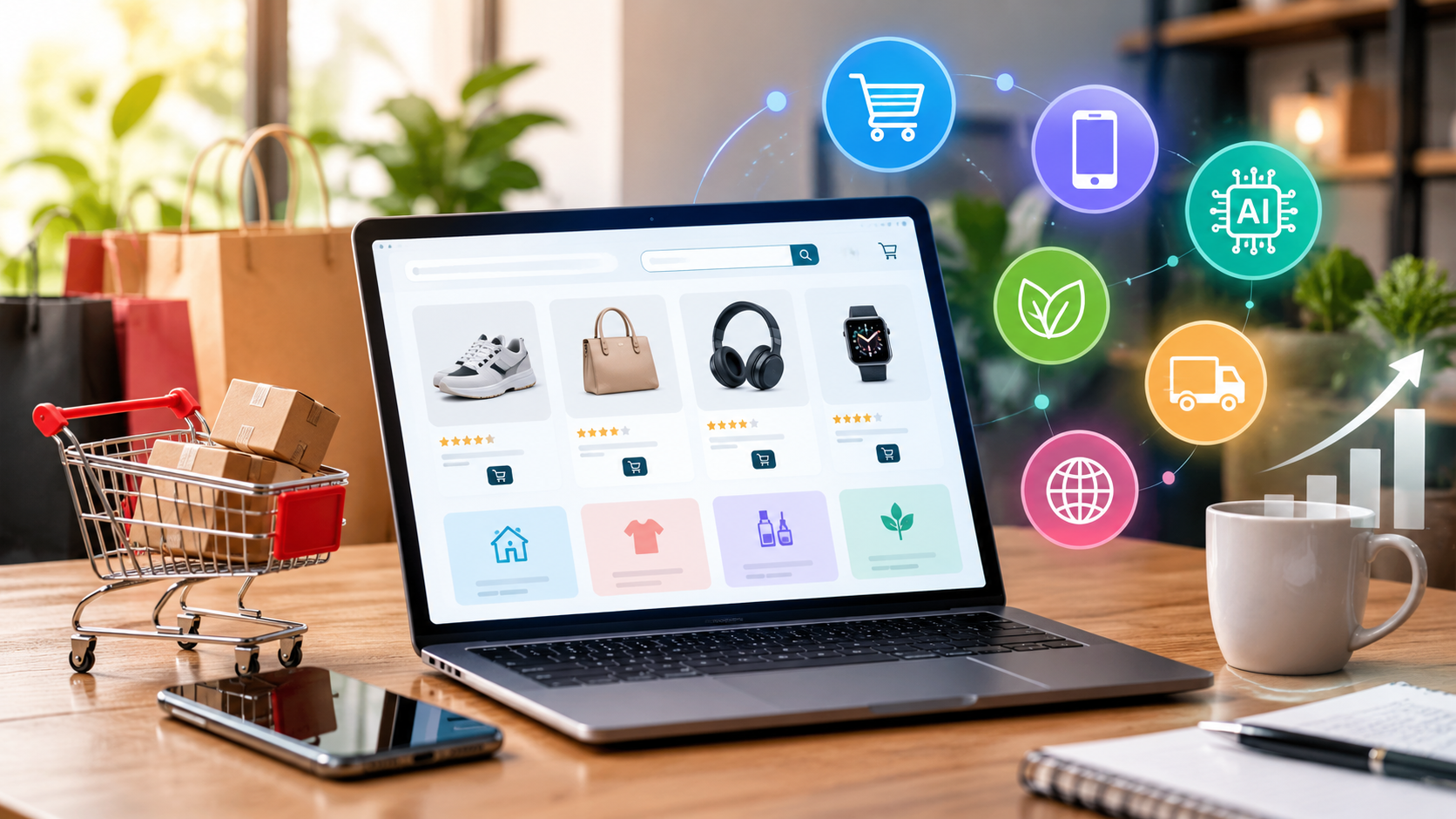
The global e-commerce sector is experiencing a technological evolution, transforming how modern consumers discover, evaluate, and purchase products across the digital ecosystem. As consumer expectations for speed, convenience, and personalization continue to rise alongside rapid advances in artificial intelligence and automation, online retail in 2026 is becoming more intuitive, immersive, and interconnected than ever before. Traditional digital storefronts featuring static product catalogs are giving way to dynamic shopping journeys powered by machine intelligence, contextual social commerce, augmented reality product visualizations, and ultra-responsive fulfillment networks. Forward-thinking brands and digital entrepreneurs who proactively adapt to these foundational shifts will cultivate enduring customer loyalty, while businesses that cling to outdated transactional models risk falling behind. In this guide, we examine the paramount e-commerce trends driving digital retail transformation in 2026 and explore how businesses can leverage these innovations to deliver extraordinary shopping experiences that captivate modern buyers.
AI-Powered Shopping Experiences
Artificial intelligence has evolved from an experimental novelty into the central engine powering modern e-commerce operations. By 2026, online shoppers routinely expect generative AI assistants to guide their purchasing journeys with human-level understanding and contextual precision. Advanced natural language processing algorithms allow consumers to describe nuanced product requirements, compare specifications across competing brands, and receive customized recommendations based on past purchase behavior and individual style preferences. Rather than navigating complex menu hierarchies or sorting through irrelevant search results, buyers can engage in natural interactive conversations that pinpoint their desired items in seconds.
Furthermore, artificial intelligence powers virtual try-on experiences through augmented reality (AR). Shoppers can visualize how furniture fits inside their living rooms using smartphone cameras or see how apparel, cosmetics, and eyewear look on their own faces and bodies before committing to a purchase. For online merchants, implementing AI enables predictive inventory replenishment, automated visual search capabilities, dynamic pricing strategies, and round-the-clock automated customer service that promptly resolves shopper inquiries while reducing return rates.
Direct Social Commerce Traffic is Growing as a New Marketing Avenue for Small Businesses
Social media platforms have transitioned beyond simple product discovery channels into vibrant retail environments. Direct social commerce is expanding rapidly in 2026, offering small and medium enterprises a direct pipeline to highly engaged consumers without requiring massive traditional advertising budgets. Shoppers can purchase items directly from short-form creator videos, lifestyle posts, and live streaming events without navigating away from their social feeds. This frictionless purchasing model eliminates checkout hurdles and shortens the path from visual inspiration to confirmed transaction.
Because younger demographic cohorts spend substantial portions of their digital time on social platforms, brands utilizing authentic creator collaborations and native social checkout systems generate strong conversion rates. Niche content creators act as trusted ambassadors, hosting live shopping broadcasts where viewers ask real-time questions, examine fabric textures, and claim promotional discounts with a single tap. For emerging boutique retailers, social storefronts provide an equitable launchpad to reach global audiences and build thriving customer communities.

More Personalised Online Shopping
Generic mass marketing has lost its efficacy in modern retail. Today’s digital shoppers demand that retail platforms recognize their preferences, anticipate their requirements, and present thoughtfully curated product selections. In 2026, personalization is achieved through ethical first-party data aggregation, analyzing browsing behaviors, verified purchase histories, and explicit customer preferences to dynamically customize storefront layouts. Returning visitors encounter personalized product showcases, tailored incentives, and customized editorial content aligned with their tastes.
Intelligent recommendation engines also consider contextual factors such as localized weather forecasts, seasonal wardrobe transitions, and upcoming holidays to serve timely suggestions that resonate. Crucially, successful personalization requires transparency and respect for customer privacy; retailers must clearly explain how data is gathered and ensure recommendations serve the buyer’s interests rather than pushing intrusive promotions. Brands that balance customization with ethical privacy practices foster strong emotional connections that translate into elevated customer lifetime value.
Mobile Commerce will Continue to Grow
Smartphone dominance over digital transactions continues unabated, with mobile commerce capturing the majority of global online retail sales in 2026. Modern consumers expect fast, responsive, and intuitive mobile shopping experiences that perform smoothly on handheld touchscreens. Progressive web applications, dedicated native mobile apps, and streamlined one-touch payment integrations like Apple Pay, Google Pay, and biometric authentication eliminate cumbersome credit card input. E-commerce retailers that design their digital shopping funnels with a mobile-first mentality—ensuring fast loading speeds, simplified navigation, and single-click checkouts—consistently outperform competitors plagued by cluttered mobile interfaces.
Moreover, mobile commerce is bolstered by omnichannel synchronization. Shoppers frequently browse merchandise on mobile devices while visiting brick-and-mortar stores, scanning QR codes to read verified reviews, check alternative color availability, or request home delivery for items currently out of stock on physical shelves. A unified digital journey bridging mobile touchpoints with real-world retail locations ensures consumers enjoy seamless shopping flexibility.
Improved Delivery Tracking Systems
The consumer shopping journey does not conclude when payment is confirmed; the post-purchase delivery phase is critical in determining customer satisfaction. Flexible delivery options, real-time logistics tracking, and rapid order fulfillment are decisive differentiators in 2026. Retailers and logistics partners are investing in automated warehouses, localized micro-fulfillment hubs, and intelligent inventory distribution algorithms to place popular inventory closer to metropolitan centers. Same-day and next-day scheduled deliveries have become standard baseline expectations in major markets, supported by interactive GPS maps providing live doorstep arrival estimates.
Sustainable Shopping Choices
Environmental sustainability has progressed from a secondary corporate marketing talking point into a decisive purchasing factor for conscientious consumers. Modern online shoppers evaluate the ecological footprint of their purchases, paying close attention to recyclable packaging materials, ethical manufacturing practices, and carbon-efficient transportation methods. In 2026, leading e-commerce platforms empower green shopping habits by offering biodegradable packaging alternatives, carbon-neutral delivery options, and transparent supply chain sourcing disclosures.
Conclusion
The landscape of modern e-commerce in 2026 is fundamentally defined by the convergence of intelligent technology, customer-centric convenience, data-driven personalization, and ethical environmental responsibility. As digital consumer behaviors continue to mature, online retailers must actively anticipate shifting market dynamics and provide seamless, transparent experiences. As online shopping continues its global expansion, success belongs to agile brands that continually innovate across social commerce, mobile optimization, hyper-efficient logistics, and ecological sustainability. Rather than treating technology as a transactional convenience, visionary retailers must place customer experience at the center of every digital touchpoint. By embracing these major e-commerce trends, investing in flexible digital infrastructure, and prioritizing customer trust, digital businesses can secure sustainable growth and thrive in the competitive future of online retail.
Frequently Asked Questions (FAQs)
1. How is artificial intelligence transforming e-commerce customer service in 2026?
AI transforms customer service through conversational generative assistants capable of resolving complex order inquiries, suggesting tailored product alternatives, and handling returns instantly without requiring human intervention.
2. What makes social commerce so effective for independent and small brands?
Social commerce enables small brands to sell products directly through creator video content, livestreams, and social posts, reducing customer acquisition costs and eliminating checkout friction by keeping shoppers within the app.
3. Why is mobile-first optimization critical for online retail success?
Mobile devices generate the majority of global e-commerce traffic. Retailers providing rapid mobile loading times, simplified visual menus, and biometric one-click checkouts achieve significantly higher conversion rates.
4. How are modern logistics technologies improving parcel delivery tracking?
Modern logistics employ automated micro-fulfillment centers, predictive inventory algorithms, and real-time GPS tracking systems that provide accurate delivery time windows and flexible local locker pickup options.
5. How can e-commerce businesses appeal to environmentally conscious shoppers?
Online retailers can implement plastic-free biodegradable packaging, offer consolidated carbon-neutral shipping, partner with ethical suppliers, and establish trade-in or refurbishment programs to support circular consumerism.



3 thoughts on “Top E-Commerce Trends That Will Shape the Future of Online Shopping in 2026”