The retro gaming community is currently discussing the Anbernic 3DS emulator dispute. The development team responsible for Azahar, a prominent open-source 3DS emulator built to carry forward the technical legacy of Citra, announced that Azahar no longer supports Anbernic devices. This rupture emerged after Anbernic promotional materials showcased an unapproved, modified build known as the AzaharPlus emulator to demonstrate Nintendo 3DS gameplay. In this analysis, we examine the roots of the dispute, clarify what withdrawing official support actually means, explore how the situation impacts the Anbernic RG DDS release, and review what buyers should consider before purchasing.
What Is the Anbernic 3DS Emulator Dispute?
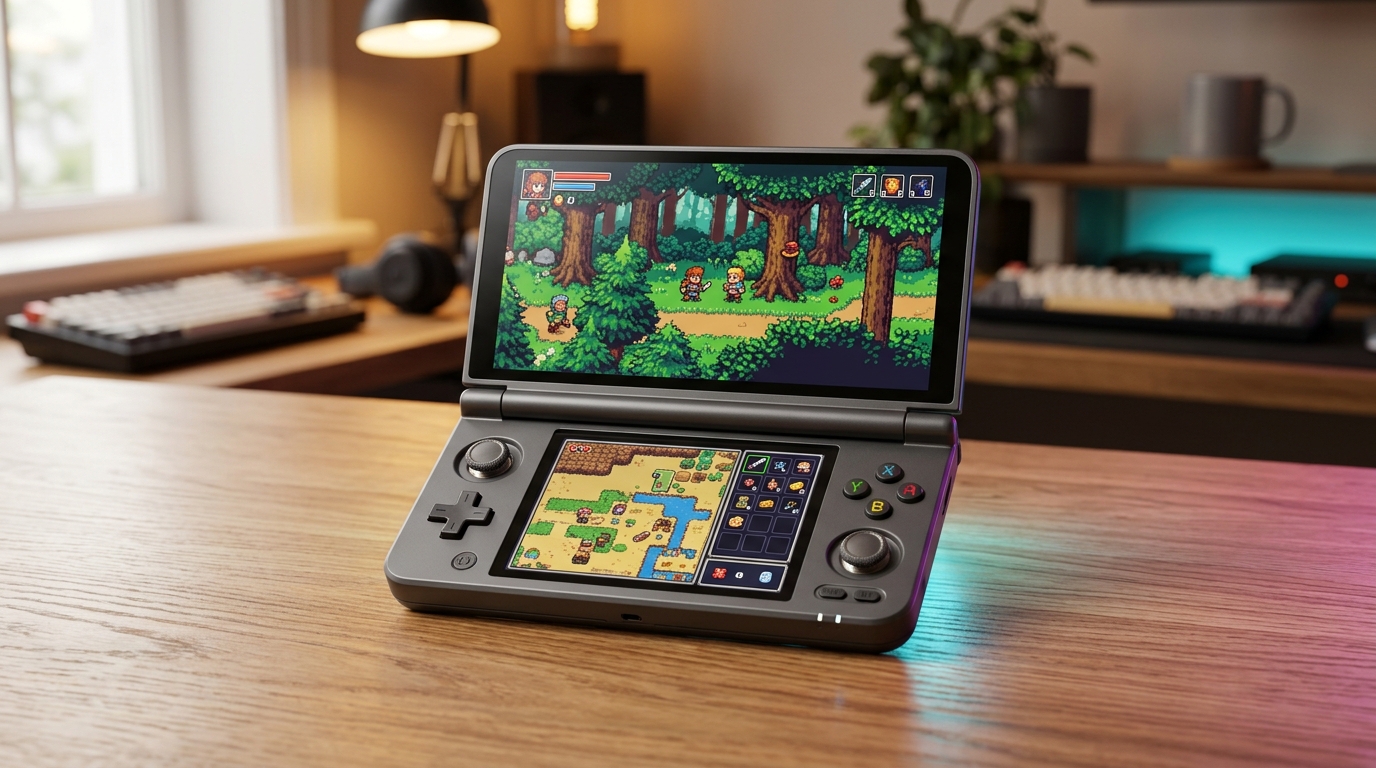
The controversy began when Anbernic published promotional videos and gameplay demonstrations showcasing its upcoming clamshell handheld, the Anbernic RG DDS. Designed with two vertically stacked displays to recreate the authentic physical form factor of the Nintendo DS and Nintendo 3DS, the device generated immediate enthusiasm. However, that excitement turned into sharp controversy when developers noticed that gameplay demonstrations were running on an unapproved modification of the Azahar 3DS emulator, openly labeled in promotional materials as “AzaharPlus.”
In response to Anbernic’s promotional campaign, the core development team behind the official Azahar project issued a firm statement on social media and developer channels, stating: “We will not be officially supporting this device.” The developers strongly objected to Anbernic using and promoting an unauthorized fork that circumvented core project guidelines. By promoting an unvetted fork to market commercial hardware, Anbernic sparked a wider debate regarding developer ethics, copyright boundaries, and open-source sustainability.
The Origins of Azahar and the Legal Realities of 3DS Emulation
Understanding why the Azahar team reacted defensively requires examining the legal environment surrounding emulation. Following the legal actions that led to the shutdown of Yuzu and the original Citra project in early 2024, open-source developers have operated under close scrutiny from video game rights holders, Nintendo. The Azahar emulator update initiative was founded on the strict principle of clean-room preservation and legal compliance.
Why Official Azahar Enforces Decryption Rules
Developing software that emulates gaming console hardware is generally recognized as legal under fair use and interoperability precedents. To shield itself from legal liability, the official Azahar project intentionally omits proprietary encryption keys and automated decryption routines. Players are required to dump their legally purchased cartridges and supply decrypted ROM files using homebrewed console hardware. This strict requirement ensures the project functions purely as an educational preservation tool rather than an automated tool for playing encrypted commercial games.
What Is the AzaharPlus Emulator Fork?
The AzaharPlus emulator is an unofficial, third-party modification derived from the open-source Azahar repository. Unlike the mainline upstream project, the modified build allegedly introduced automated decryption routines and file-handling mechanisms designed to run encrypted commercial ROMs without manual user preparation. By featuring AzaharPlus in promotional teasers, Anbernic highlighted capabilities that the mainline developers had avoided. The Azahar team publicly condemned the fork as an unauthorized variant that compromised the project’s ethical standing and legal defense.
Why the Azahar Team Withdrew Official Support for Anbernic Hardware
The decision to cease Anbernic emulator support was primarily driven by risk management and developer resources. When commercial hardware vendors package or market devices using software that bypasses technical protection measures, rights holders often conflate the underlying open-source emulator with commercial copyright infringement.
Additionally, developer burnout contributed to the decision. Open-source maintainers frequently find themselves overwhelmed with bug reports, driver crash logs, and performance complaints from users who purchased budget handhelds with proprietary chipsets. When commercial manufacturers profit from selling physical consoles without contributing upstream code or providing technical documentation, volunteer teams bear the support burden without compensation. Severing ties with Anbernic was a deliberate step to protect project autonomy and focus on clean, documented platforms.
Official Support Withdrawal vs Hardware Blocking: Clarifying the Facts
Following the announcement, some social media posts claimed that Azahar had blocked or blacklisted Anbernic handhelds from launching the emulator. Here are the confirmed facts:
What Official Withdrawal Means: The Azahar team will no longer investigate, test, or resolve bugs specific to Anbernic hardware. If an update causes audio stutter on an Anbernic chip, graphical glitches on custom display controllers, or fails to detect secondary screen hardware, the issue will not be investigated or patched in official releases.
What It Does Not Mean: The announcement does not mean that Azahar contains hardcoded blocks preventing it from running on Anbernic devices. Because Azahar is open-source Android and desktop software, standard APK builds can still be manually installed on Android-powered Anbernic consoles. However, users must accept that they are operating without official developer assistance or hardware-specific performance optimizations.
Impact on the Upcoming Anbernic RG DDS Release
The timing of this dispute is especially significant for the Anbernic RG DDS release. As a dual-screen device, the RG DDS relies on software that can manage two simultaneous displays, touch inputs, and stereoscopic rendering toggles across separate panels. While Nintendo DS emulation through applications like Drastic is mature, Nintendo 3DS emulation is more demanding and architecturally complex.
Without official cooperation from the Azahar project, achieving optimal 3DS emulator compatibility on the RG DDS will require extra effort. Anbernic or community firmware developers must independently maintain custom forks, port display drivers, and address dual-screen scaling issues. Prospective buyers anticipating a seamless, out-of-the-box 3DS experience should review independent community testing before purchasing the device.
What This Means for Existing Anbernic Handheld Console Owners
For gamers who already own an Anbernic handheld console—such as the RG Cube, RG556, or RG40XX—the practical impact depends on how they use their devices:
Current Setups Keep Working: If you currently have an operational build of Azahar or an older Citra fork installed on your device, that software will continue to function normally. Local installations will not stop working remotely.
Future Upstream Optimizations May Bypass Your Device: As the official Azahar project publishes new architectural improvements, Vulkan renderer optimizations, and shader caching updates, Anbernic-specific quirks will not be addressed. If an upstream release introduces a regression on Mali or PowerVR graphics chips, users will need community-made workarounds.
Custom Firmware Becomes Essential: Community firmware projects such as Knulli, Rocknix, and GammaOS will become increasingly vital for bridging the gap between mainline emulator code and proprietary handheld hardware.
Emulation Alternatives for Nintendo 3DS Gamers
While the Azahar emulator Anbernic fallout has created friction, the wider retro emulation ecosystem offers several alternatives for handheld gaming:
Lime3DS and Mandarine: Alongside Azahar, forks like Lime3DS and Mandarine continue to develop open-source solutions derived from Citra. These projects refine Vulkan rendering pipelines, controller mapping configurations, and Android compatibility.
Citra MMJ: Developed by independent developer weihuoya, Citra MMJ remains a popular performance-focused Android fork tailored for mobile processors, offering resolution scaling and speed hacks for lower-powered chipsets.
Cloud and PC Game Streaming: For demanding titles that exceed portable chipset thermal limits, streaming emulated games from a local PC or utilizing cloud streaming services—similar to options explored in our Microsoft Xbox Cloud Gaming overview—provides a low-latency alternative with high visual fidelity.
Legal and Ethical Considerations in Commercial Retro Handhelds
The dispute between Azahar and Anbernic highlights structural tensions across the retro gaming industry. While hardware manufacturers operate in competitive international markets—adopting digital consumer strategies discussed in our look at modern e-commerce retail trends—the open-source software they depend upon exists in a delicate legal space.
When commercial hardware brands showcase open-source emulators without respecting licensing boundaries, attributing creators, or adhering to strict copyright practices, they risk attracting scrutiny from major rights holders. Preserving emulation requires clear ethical boundaries and collaboration between hardware makers and software creators.
Conclusion
The Anbernic 3DS emulator dispute marks a significant moment for retro handheld enthusiasts. By formally withdrawing official support from Anbernic hardware following the promotion of the unauthorized AzaharPlus fork, the Azahar team has established a firm boundary to protect its legal standing. While existing devices will continue running community builds and standard APKs, buyers of the dual-screen Anbernic RG DDS must recognize that seamless 3DS compatibility will rely on community firmware rather than upstream developer support. As the retro handheld market matures, lasting progress will require hardware companies and open-source developers to work with greater mutual respect.
Frequently Asked Questions (FAQs)
1. What caused the Anbernic 3DS emulator dispute?
The dispute arose when Anbernic used promotional videos for its upcoming RG DDS handheld featuring AzaharPlus, an unapproved fork of the Azahar emulator that bypassed legal decryption standards.
2. Can Anbernic handheld consoles still run the official Azahar emulator?
Yes. Azahar has not been blocked from running on Anbernic devices. However, developers will not investigate bug reports, fix device-specific crashes, or optimize performance for Anbernic hardware.
3. How does AzaharPlus differ from the official Azahar project?
Official Azahar requires user-decrypted ROMs dumped from legal cartridges. In contrast, AzaharPlus is an unofficial fork that allegedly integrates automated decryption tools and system files.
4. How does this dispute affect the upcoming Anbernic RG DDS?
Because the RG DDS will not receive official support from Azahar, buyers must rely on community firmware developers to optimize dual-screen layouts, scaling, and controls for 3DS games.
5. What alternative 3DS emulators can retro handheld owners use?
Alternative options include Citra-based forks like Lime3DS, Mandarine, and Citra MMJ, alongside standalone Android builds and supported RetroArch emulation cores.