
In recent years, the global personal care industry has witnessed an unprecedented transformation driven by a rapidly expanding clean beauty movement. Modern consumers are no longer satisfied with superficial cosmetic promises; they are increasingly demanding transparency, safety, and natural formulations from their daily skincare brands. With department store shelves and online beauty marketplaces flooded with thousands of competing lotions, cleansers, and serums, deciphering which products genuinely support skin health can feel overwhelming. Many products market themselves with appealing buzzwords like “pure,” “botanical,” or “eco-friendly,” yet conceal harsh synthetic additives within complicated ingredient lists. This comprehensive guide demystifies the world of clean beauty essentials, providing you with actionable knowledge to read cosmetic labels critically, identify beneficial botanicals, avoid potentially toxic additives, and curate a nourishing skincare routine that promotes lasting, radiant health.
Understanding Clean Beauty Essentials
Clean beauty essentials represent personal care formulations thoughtfully engineered to exclude questionable, irritating, or endocrine-disrupting chemicals. Rather than relying on synthetic fillers or aggressive surfactants that strip your skin’s delicate moisture barrier, clean skincare prioritizes wholesome, nutrient-dense components derived from nature and verified through safe laboratory science. The philosophy behind clean beauty is rooted in preventative wellness: recognizing that what you apply to your skin every morning and evening is absorbed into your body over time. By selecting products free from known allergens, hormone disruptors, and harsh preservatives, you actively support your skin’s natural microbiome, improve barrier resilience, and reduce systemic toxic loads while minimizing environmental pollution during production and disposal.
Deciphering Labels
When shopping for skincare essentials, scrutinizing product labels is your most powerful tool. The front of a cosmetic bottle often showcases marketing slogans designed by advertising agencies, whereas the back label tells the true scientific story. Regulatory agencies require manufacturers to list ingredients in descending order of concentration; the top five or six listed components typically make up eighty to ninety percent of the formula. If a bottle highlights “organic aloe vera” on its front packaging, but aloe vera appears near the very bottom of the ingredient list after numerous synthetic polymers and silicones, the botanical concentration is virtually negligible.
To cut through misleading greenwashing claims, look for verifiable third-party seals from respected international certification boards. Standards set by the Environmental Working Group (EWG Verified), COSMOS Organic, the Soil Association, and NSF International impose strict ingredient safety thresholds and audit manufacturing facilities directly. Products carrying these certified insignias must prove that their ingredients are responsibly sourced, free from documented contaminants, and rigorously verified for biological safety, giving you peace of mind with every application.
Key Ingredients to Avoid
Becoming an educated consumer means familiarizing yourself with problematic cosmetic additives that have documented associations with dermatological irritation or systemic health risks. Here are the primary chemical offenders to avoid when building a clean skincare regimen:
Parabens (Methylparaben, Propylparaben, Butylparaben): Widely used as low-cost chemical preservatives to prevent bacterial growth in water-based formulas. Multiple scientific studies have shown that parabens can mimic estrogen in the human body, raising concerns regarding hormonal disruption and long-term reproductive health.
Sulfates (Sodium Lauryl Sulfate and Sodium Laureth Sulfate): Aggressive foaming agents commonly found in facial cleansers and body washes. Sulfates strip the skin’s lipid barrier of natural protective oils, leading to chronic dryness, inflammation, and compromised barrier function.
Synthetic Fragrances and Phthalates: The term “parfum” or “fragrance” on an ingredient list can hide hundreds of undisclosed synthetic chemicals, solvents, and phthalates under intellectual property trade secret protections. These compounds are frequent culprits behind contact dermatitis, persistent respiratory allergies, and endocrine imbalances.
Silicones and Mineral Oils: Petroleum by-products like petrolatum and synthetic dimethicones create an occlusive plastic-like film over the skin. While they create an artificial sensation of smoothness, they can trap debris and sebum inside pores, exacerbating acne breakouts.
Embracing Natural Alternatives
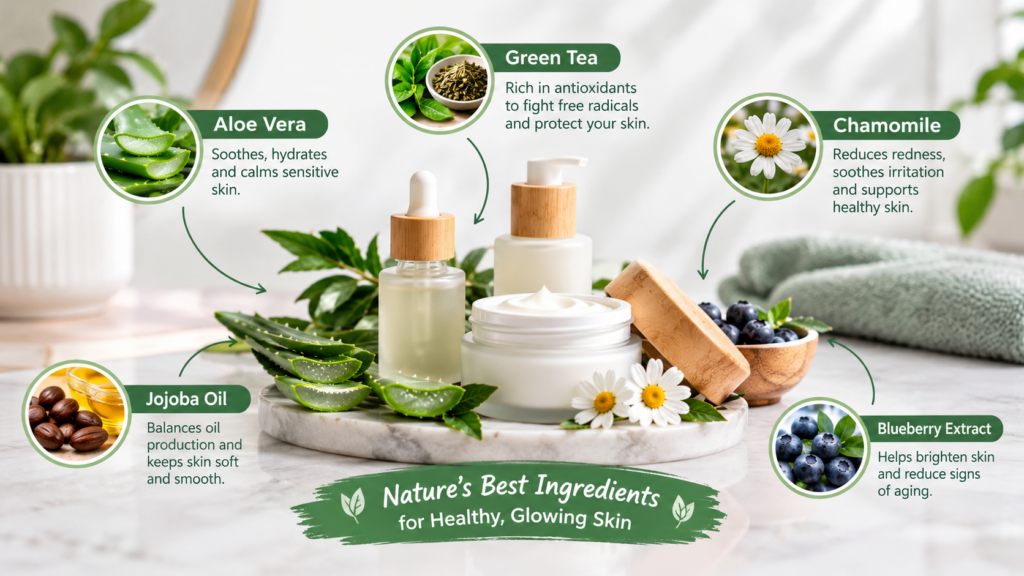
Eliminating harmful chemicals does not mean sacrificing visible skincare performance. Today’s clean beauty formulations harness potent, bio-compatible botanicals that deliver impressive restorative results without triggering cellular inflammation. Cold-pressed plant oils like jojoba, rosehip seed, and marula closely mimic human sebum, delivering deep cellular hydration, essential fatty acids, and lipid barrier restoration. Plant extracts such as centella asiatica (cica), green tea, and chamomile provide profound anti-inflammatory benefits that soothe sensitive, irritated complexions.
For individuals targeting fine lines and hyperpigmentation, clean alternatives to harsh synthetic chemicals offer remarkable efficacy. Bakuchiol, a natural antioxidant derived from the babchi plant, stimulates collagen synthesis and cell renewal just like conventional retinol, without causing peeling, redness, or sun sensitivity. Similarly, gentle fruit enzymes from papaya and pumpkin provide enzymatic exfoliation, sloughing away dead skin cells to reveal glowing, luminous skin without abrasive scrubbing.
Transparency and Sustainability
True clean beauty extends beyond what is inside the bottle; it encompasses how a brand conducts its entire business. Conscientious consumers actively support skincare companies that embrace full ingredient disclosure, publishing the exact origin and function of every component in their formulations. When brands prioritize ethical wildcrafting and fair-trade sourcing, they ensure indigenous agricultural communities receive equitable wages and work in safe farming conditions.
Furthermore, eco-conscious packaging has become an essential pillar of the clean movement. Leading sustainable beauty brands utilize infinitely recyclable amber glass jars, post-consumer recycled (PCR) plastics, biodegradable aluminum tubes, and soy-based printing inks. By minimizing single-use packaging and offering convenient refill pouches, progressive beauty companies reduce unnecessary landfill waste and minimize their environmental footprint throughout the product lifecycle.
Cruelty-Free Commitment
An uncompromising commitment to ethical animal welfare is a non-negotiable hallmark of authentic clean beauty. Modern testing alternatives—such as lab-grown human tissue cultures, computer predictive modeling, and clinical human volunteer trials—offer superior scientific accuracy without causing harm to animals. When choosing clean skincare essentials, look for official certifications from the Leaping Bunny Program (Cruelty Free International) or PETA’s Beauty Without Bunnies. These certifications verify that neither the finished product nor any raw ingredient was tested on animals across any stage of the global supply chain, allowing you to care for your skin with complete ethical integrity.
Conclusion
Transitioning toward clean beauty essentials is one of the most rewarding commitments you can make for your long-term skin health and overall well-being. By taking the time to understand cosmetic labels, avoiding harmful synthetic preservatives and fragrances, and welcoming nutrient-dense botanical alternatives into your daily routine, you empower your skin to heal, regenerate, and radiate naturally. Remember that every purchasing decision you make acts as a meaningful vote for ethical manufacturing, animal welfare, and environmental preservation. Choose conscious formulations that nourish your body while respecting the earth, and embrace a cleaner, healthier future for your skin.
Frequently Asked Questions (FAQs)
1. What exactly does the term “clean beauty” mean in modern skincare?
Clean beauty refers to personal care products formulated without harmful, toxic, or irritating chemicals such as parabens, phthalates, sulfates, and artificial fragrances, emphasizing safe, natural, and ethically sourced alternatives.
2. Are all natural or botanical ingredients automatically safe for sensitive skin?
Not necessarily. While natural ingredients are generally gentler, certain botanicals and concentrated essential oils can trigger allergic reactions in sensitive skin. It is always wise to perform a 24-hour patch test before introducing new products.
3. How can I verify that a skincare product is genuinely non-toxic and clean?
Scrutinize the full ingredient list rather than front-label claims. Look for recognized third-party safety certifications such as EWG Verified, COSMOS Organic, and Leaping Bunny cruelty-free seals.
4. Can clean beauty formulations effectively address signs of aging and acne?
Yes. Clean active botanicals like bakuchiol, niacinamide, willow bark extract, and stabilized vitamin C deliver clinically proven anti-aging, firming, and blemish-clearing results without damaging the skin barrier.
5. Are clean beauty skincare products significantly more expensive than conventional ones?
While some clean skincare lines carry a premium price due to cold-pressed botanical oils and sustainable packaging, there are many accessible, budget-friendly clean beauty brands that offer high-performance essentials at affordable price points.