
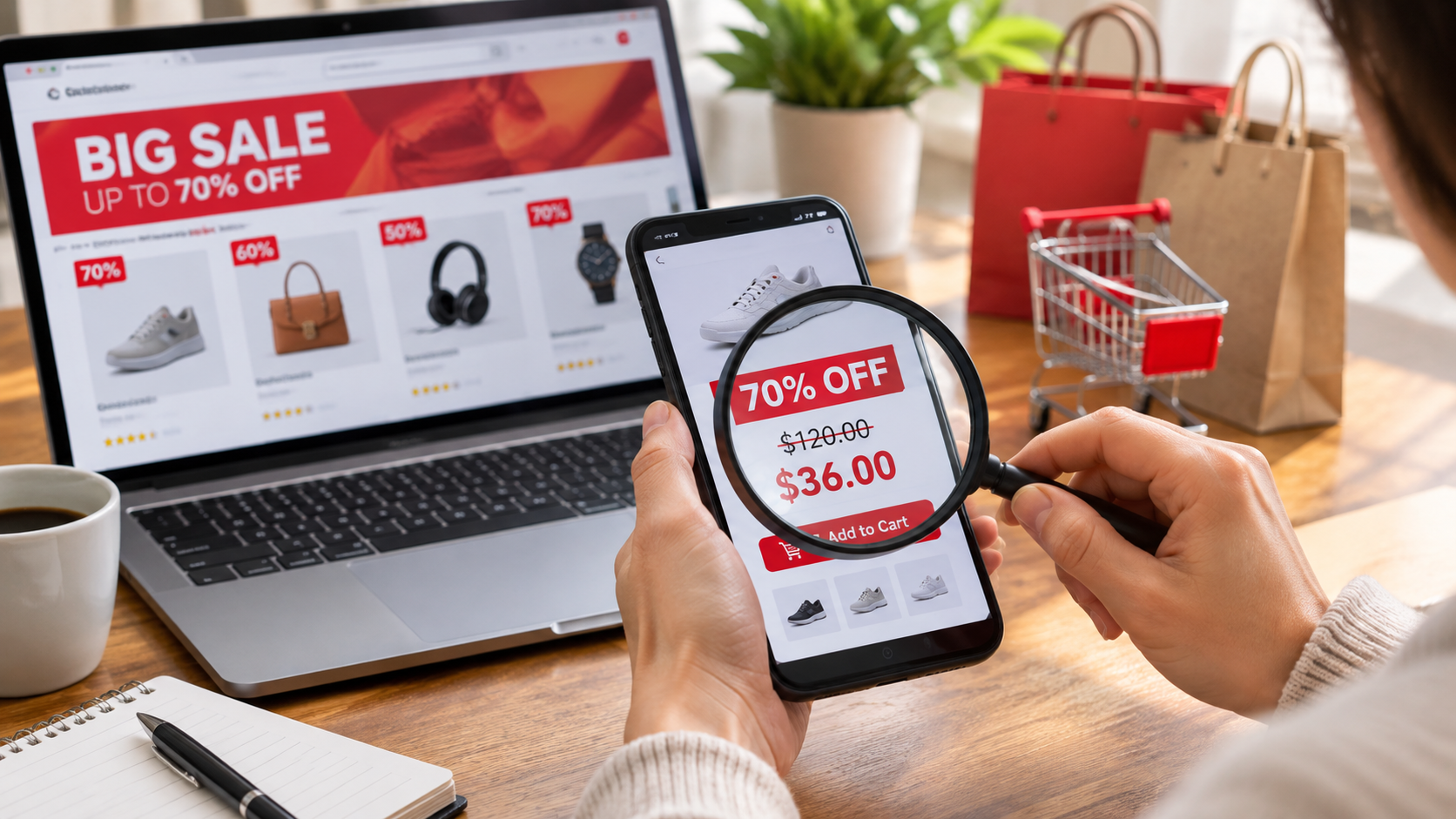
Modern shopping has undeniably made it easier than ever to quickly find essential everyday products at supposedly competitive retail prices. From exciting flash sales and exclusive limited-time promotional offers to discount coupons and holiday seasonal clearances, enthusiastic shoppers are constantly bombarded with thrilling opportunities to save money. However, the unfortunate reality remains that not every discount is as good as it initially appears on your computer screen. Some deceptive online retailers regularly utilize misleading psychological pricing tricks that intentionally make a mediocre deal appear significantly larger and much more valuable than it actually is. Learning how to spot fake discounts online can help you make smarter purchasing decisions, protect your financial budget, and avoid spending more money than necessary.
What Is a Fake Discount?
A deceptive fake discount is essentially a heavily manipulated marketing promotion that intentionally gives the misleading impression of a financial saving without actually offering much genuine retail value to the consumer. For example, a popular electronic product may be aggressively advertised as being massively marked down after its supposed original retail price has been artificially and secretly increased shortly before the promotional sale officially begins. Other common misleading tactics can easily include artificially inflated original prices, aggressive countdown timers, misleading limited-stock warning messages, or percentage discounts that only magically apply after you commit to purchasing additional expensive products. The goal behind these manipulative strategies is usually to create a false sense of urgency and encourage shoppers to buy the product before they have time to properly research and compare prices.
1. Check the Price History
One of the easiest and most reliable ways to verify a discount is to carefully examine the specific product’s historical pricing data. A popular consumer product prominently listed at one hundred dollars with a forty percent discount banner may initially seem like a great financial deal, but if it was consistently selling for exactly sixty dollars the entire month before the promotion began, the supposed discount isn’t particularly impressive or valuable. Dedicated price-tracking websites and specialized internet browser extensions can help you accurately understand exactly how a specific product’s retail price has fluctuated over an extended period. Routinely checking historical price data is especially useful and recommended during major global shopping events like Black Friday or holiday sales.
2. Compare Prices Across Multiple Stores
Never automatically assume that the very first heavily discounted retail price you see is definitively the cheapest option currently available on the internet. Always take the necessary time to actively search for the exact same consumer product on several different reputable retail websites and carefully compare the final checkout prices before submitting your payment. Remember to always calculate hidden shipping costs, mandatory taxes, required subscription membership fees, and various other unexpected checkout charges. A desirable product aggressively advertised at eighty dollars with free shipping could ultimately be significantly cheaper than a similar item priced at seventy dollars that requires expensive overnight delivery fees to reach your residential address.
3. Look Beyond the Percentage Discount
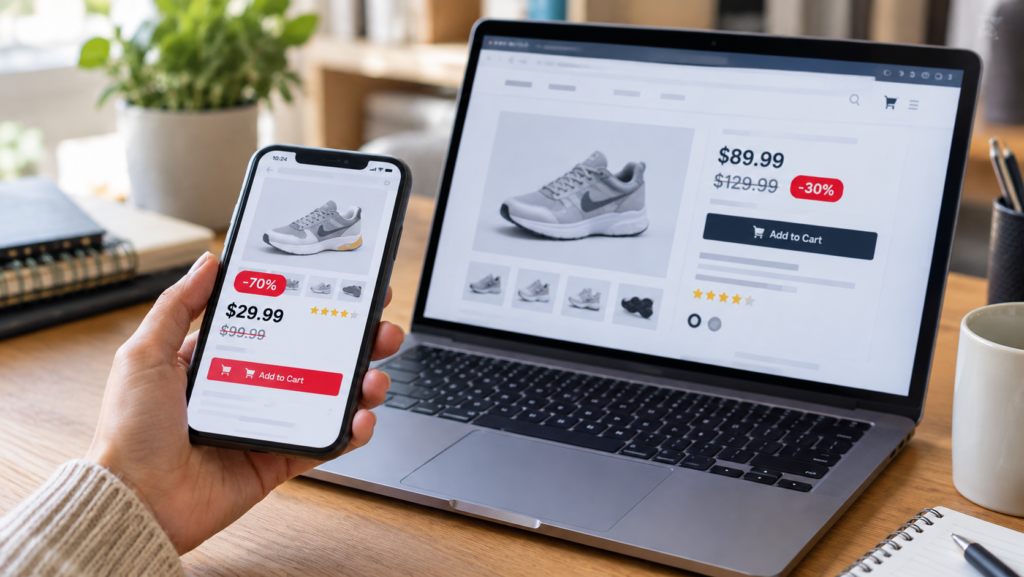
Massive, brightly colored discount percentages are specifically designed by marketing professionals to immediately attract consumer attention, but the advertised percentage alone doesn’t actually tell you whether you are getting a good financial deal. Instead of blindly focusing on a promotional banner shouting about huge savings, carefully look at the actual final dollar amount you will pay at checkout and directly compare it with the specific product’s typical, everyday selling price across the market. A smaller, modest discount on a consumer product that is already competitively and fairly priced by a reputable seller may actually be a significantly better financial deal than a discount based entirely on an artificially inflated, unrealistic original retail price tag.
4. Be Careful With Countdown Timers
Aggressive countdown timers are common features on modern shopping websites and mobile applications. Urgent promotional messages screaming about limited hours remaining can easily create psychological pressure to make a quick, unresearched consumer purchase. However, some deceptive websites may secretly and repeatedly reset these timers every single day or simply use them primarily as an aggressive psychological marketing technique rather than a genuine reflection of inventory availability. If you ever see a deal accompanied by an unusually aggressive countdown clock, always force yourself to take a moment to properly research the product and verify the pricing before rushing to submit your valuable payment information.
5. Check the Fine Print
Some discounts secretly come with restrictive conditions that aren’t immediately obvious to the casual shopper. For example, a retailer might proudly advertise a discount but secretly require you to spend a minimum amount, use a specific payment method, buy multiple identical products simultaneously, or subscribe to a recurring monthly membership. Always carefully read the detailed terms and conditions hidden at the bottom of the webpage to accurately determine whether the proudly advertised promotional price actually applies to your specific intended purchase without hidden strings attached.
6. Watch Out for Suspicious Websites
It is crucial to remember that not every incredible deal comes from a trustworthy, reputable retailer. low prices can sometimes be a massive, glowing warning sign indicating poor quality counterfeit products, dangerous scams, or entirely fraudulent websites designed solely to steal your financial information. Before ever entering your sensitive payment information, rigorously check the specific retailer’s overall reputation, verify their physical contact information, read their detailed return policy, and deeply analyze independent customer reviews. Be particularly cautious and skeptical if an unknown website offers retail prices that are dramatically lower than every other major, established retailer on the internet.
7. Ask Yourself If You Really Need It
Perhaps the absolute simplest and most effective way to avoid falling for a terrible deal is to simply avoid making unnecessary, impulsive consumer purchases in the first place. A discount doesn’t automatically mean you are actually saving money. If you impulsively spend fifty dollars on something you didn’t need simply because it was aggressively advertised as being massively marked down, you haven’t saved money; you’ve still wasted fifty dollars. Before clicking the purchase button, always pause and honestly ask yourself whether you would actually purchase the specific product at its normal retail price without the psychological pressure of the sale.
Conclusion
Deceptive fake discounts can easily make the modern shopping experience significantly more confusing and financially dangerous, but a little bit of diligent research can protect you from misleading promotional offers. Always remember to check historical price data, compare multiple different retailers, look closely at the final checkout price rather than the percentage, read the hidden fine print, and avoid making rushed financial decisions simply because of aggressive countdown timers. The absolute best online deal isn’t necessarily the specific one with the biggest, brightest discount percentage boldly splashed across the screen. It’s the one that gives you real, tangible retail value for your hard-earned money without relying on cheap psychological tricks.
Frequently Asked Questions (FAQs)
1. How do online retailers artificially inflate their original product prices before a sale?
Many online retailers will quietly raise the standard retail price of a specific product for a brief period right before a major promotional event begins, allowing them to then offer a percentage discount that simply brings the price back down to its normal level.
2. Are browser extensions actually safe to use for tracking historical prices?
Yes, reputable browser extensions specifically designed for tracking historical product prices are generally very safe and recommended for frequent online shoppers. Ensure you download these extensions directly from official app stores and carefully read their specific privacy policies.
3. What should I do if I accidentally purchase a product from a fraudulent website?
If you suspect you have fallen victim to a fraudulent website, immediately contact your credit card provider or payment platform to officially dispute the fraudulent charge, request a complete financial chargeback, and consider canceling the compromised card to prevent future unauthorized transactions.
4. Why do retailers use aggressive countdown timers if they are often fake?
Retailers utilize aggressive countdown timers because they tap into the powerful psychological phenomenon known as the fear of missing out. This psychological pressure often causes anxious consumers to bypass logical price comparisons and make hasty, impulsive purchasing decisions they might otherwise avoid.