
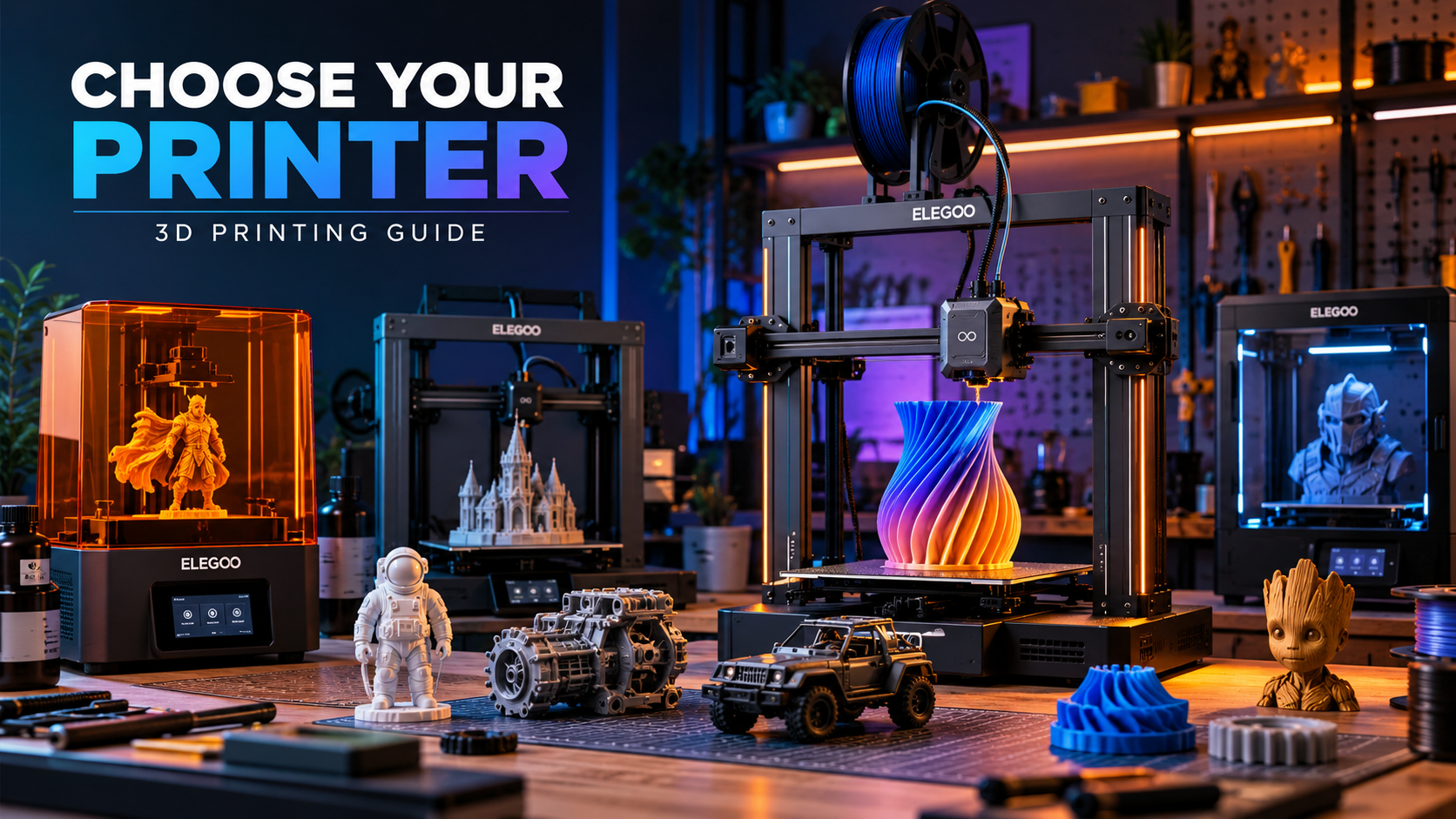
Diving into the expansive world of 3D printing can be both thrilling and complex. Whether you are a beginner looking to print your first household gadget or a seasoned professional engineering complex prototypes, your success depends on matching your goals with the appropriate hardware. This is where a comprehensive brand like ELEGOO shines. The modern ELEGOO ecosystem encompasses a diverse family of machines, including lightning-fast FDM printers, ultra-detailed liquid resin printers, large-format systems, and a fully integrated catalog of proprietary filaments, resins, and essential accessories.
Making the correct selection requires a careful analysis of critical factors. You must consider your desired build volume, the fundamental type of printing technology that suits your workflow, specific material requirements, required print speed, and the ultimate level of microscopic detail your final product demands. By understanding these variables, navigating the ELEGOO product lineup transforms from a daunting task into an exciting journey of discovering the perfect technological companion.
What Makes the Current Range Interesting
One of the most appealing aspects of the current ELEGOO catalog is how intuitively it is structured around practical, real-world applications. Rather than throwing a chaotic list of specifications at the consumer, the manufacturer segments its offerings based on precisely what you intend to create. Traditional FDM models are universally recognized for their flexibility, functional strength, and rapid production capabilities—making them ideal for mechanical parts, jigs, and everyday prints. Conversely, the acclaimed Mars and Saturn resin families are engineered with a focus on hyper-detailed, high-resolution designs.
As you evaluate the wide array of equipment available today, the newly introduced Centauri series demands special attention. The Elegoo Centauri Carbon represents a massive leap forward, built upon the coveted CoreXY kinematic architecture. This structural design drastically reduces the moving mass on the print head, unlocking breathtakingly fast printing speeds while maintaining rigorous dimensional accuracy. Taking this innovation further, the Elegoo Centauri Carbon 2 features a blistering 350°C high-temperature nozzle, a fully enclosed printing chamber, and auto-calibration systems. Complemented by a rigid, die-cast frame, these Centauri machines can achieve mind-boggling speeds of up to 500 mm/s, bridging the gap between hobbyist accessibility and industrial-grade performance.
A Quick Look at the Lineup
To help you conceptualize the distinct advantages of each machine, here is a comparative breakdown of notable models currently available in the ELEGOO ecosystem:
| Model | Printing Focus | Notable Point | Good Fit For |
|---|---|---|---|
| Centauri Carbon | FDM (Filament) | CoreXY high-speed structural design | Rapid prototyping and fast everyday projects |
| Centauri Carbon 2 | FDM (Filament) | 350°C hotend and fully enclosed chamber | Advanced, temperature-sensitive material flexibility |
| Neptune 3 Pro | FDM (Filament) | Established, reliable, and highly practical design | Absolute beginners and casual home projects |
| Neptune 4 Max | FDM (Filament) | Massive, industry-leading build volume | Cosplay armor, props, and exceptionally large prints |
| Mars 5 Ultra | SLA (Resin) | Ultra-high-detail microscopic resin printing | Tabletop models, jewelry casting, and intricate miniatures |
Analyzing this table clarifies a crucial reality: there is no such thing as a universally “perfect” 3D printer. Perfection is strictly tethered to your unique use case. If your upcoming project involves printing a wearable helmet, the expansive build platform of a Neptune printer is undeniably your best choice. If you are painting a tabletop goblin and require visible pores, you will unequivocally need the precision of a Mars resin printer. Meanwhile, if you are running a small shop and need to rapidly produce dozens of desk organizers a day, the speed-demon capabilities of the Centauri line will be your ultimate workhorse.
Think About Materials Before Buying
It is a common pitfall for newcomers to fixate entirely on the machine itself, forgetting that the 3D printer is merely one component of a broader system. The specific materials you choose to extrude or cure will profoundly influence the mechanical strength, visual finish, and overall longevity of your final object. The impressive variety of premium filaments and photopolymer resins offered directly within the ELEGOO collection empowers users to experiment with a vast spectrum of material properties without blindly mixing and matching unverified third-party brands.
Furthermore, it is vital to recognize the dramatic differences in workflow between the two dominant technologies. FDM printing generally involves slicing a file, heating up a nozzle, and waiting for the plastic to lay down layer by layer, with minimal post-processing required. Resin printing involves handling toxic liquid chemicals, wearing protective gear, and undertaking a mandatory multi-step post-processing workflow that includes chemical washing and UV curing. Buyers must weigh their willingness to engage with these distinct workflows when deciding between an FDM or resin machine.
This holistic view is where the true elegance of the ELEGOO ecosystem becomes apparent. By integrating their printers, premium filaments, washable resins, dedicated wash and cure stations, and replacement accessories into one cohesive environment, they have drastically lowered the barrier to entry. This integrated approach significantly eases the purchasing process for any creator who desires to build a fully functional workstation from day one.
Where the Older Neptune Models Still Fit
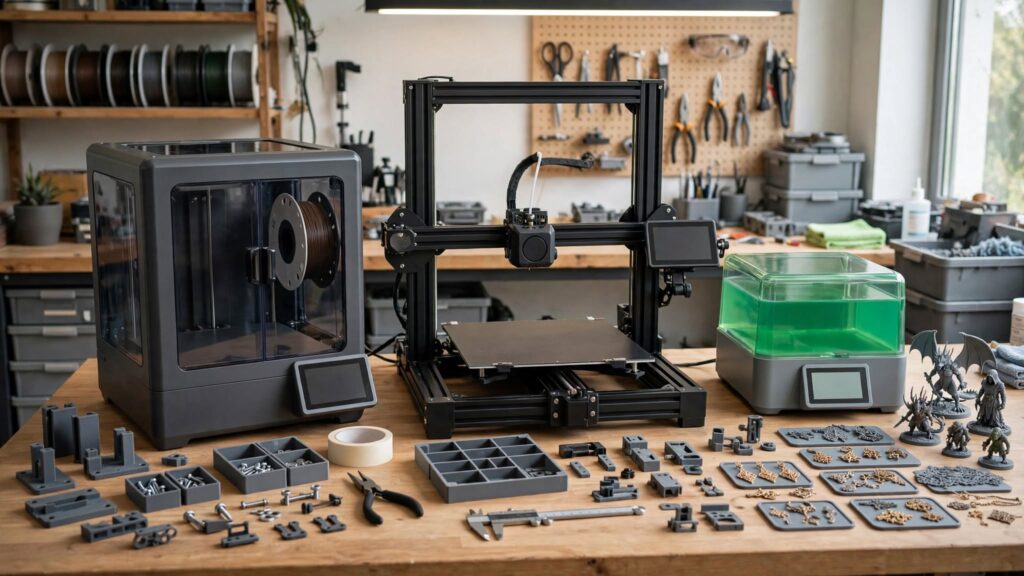
In the highly competitive tech industry, new equipment naturally attracts media attention. However, dismissing older, proven equipment can be a costly oversight. The Elegoo Neptune 3 Pro serves as a perfect example of this principle. It remains an incredibly rational, capable, and budget-friendly solution for reliable FDM printing. With a massive global community of users and an abundance of troubleshooting resources online, it is undeniably suitable for individuals who seek a simple, dependable, and predictable manufacturing tool without the premium price tag of next-generation features.
On the opposite end of the size spectrum, the Elegoo Neptune 4 Max is purpose-built for creators who require vast amounts of uninterrupted build volume. Large-format 3D printing unlocks entirely new creative opportunities, allowing for the seamless fabrication of enormous single-piece parts and incredibly complex multi-part mechanical structures that would be impossible on a standard machine. The primary trade-off is the absolute necessity of having adequate physical workspace to house such a massive piece of equipment, as well as the patience required for multi-day printing operations.
When Seasonal Deals Make Sense
As you navigate your purchasing journey, you will inevitably encounter enticing seasonal promotions. Actively searching for terms like “Elegoo Easter Sale 3D printer” or waiting for Black Friday discounts can undoubtedly be a financially savvy strategy. However, prospective buyers must exercise immense caution and maintain strict discipline. It is imperative to critically evaluate how the printer’s core specifications, the included accessories, and the discounted price align with your actual needs, rather than making an impulsive decision purely triggered by a flashy sale tag.
A heavily discounted 3D printer is only a genuinely worthwhile investment if its technical capabilities directly correspond to the stringent requirements of your daily workflow. Buying a massive FDM printer on sale when you secretly wanted to print miniatures will ultimately result in buyer’s remorse. Conversely, if you have already determined that high-resolution resin is your medium of choice, catching the Elegoo Mars 5 Ultra during a seasonal promotion is an absolute steal. As a prominent member of the Mars series, it represents the gold standard for producing museum-quality miniatures, stunning display dioramas, and similar high-fidelity models.
A Smarter Way to Choose
Ultimately, the most intelligent and foolproof strategy for selecting the perfect 3D printer is to utilize a process of reverse engineering. Start by vividly imagining the exact physical item you wish to hold in your hands, and then work backward to the ELEGOO machine best equipped to create it. If your vision includes functional brackets, rapid engineering prototypes, durable household organizers, or oversized structural pieces, FDM technology is undeniably your required path. Conversely, if your primary goal involves microscopic aesthetic details, organic textures, and ultra-smooth surface finishes, resin printing technology is your only logical choice.
Once you have firmly established the underlying technology, the subsequent steps become a simple matter of comparative filtering. You must weigh the required build volume against your available desk space, determine your desired printing speed, confirm material compatibility, and finally, factor in your total budget—including the ongoing costs of consumable filaments, resins, and maintenance parts.
Fortunately, today’s comprehensive ELEGOO product range facilitates this analytical process beautifully. By logically grouping their machines based on printing technology and intended end-use, the manufacturer has taken much of the guesswork out of the equation. Regardless of whether you ultimately pull the trigger on a lightning-fast Centauri, a massive Neptune, or a microscopic-precision Mars, ensure your final decision is fundamentally rooted in the specific demands of your personal projects, rather than simply chasing the most hyped name currently trending in the 3D printing community.